
Completing the circle
On the "Hacks" series finale + the usual ephemera

Ed. note: spoilers ahead for Thursday night’s series finale of “Hacks” (confined to the second half of this piece).
Last summer, in need of a palate cleanser, I watched the entire run of “Seinfeld” for the first time. Of course, I knew a lot of the most famous episodes and ubiquitous cultural references.
The other thing I knew about the show: its much maligned series finale. The episode’s less than sterling reputation has taken on a life of its own, including as a running bit on Larry David’s own “Curb Your Enthusiasm” (and fittingly resolved in the “Curb” series finale two years ago — which, unlike its predecessor, was pretty, pretty, pretty good).
Maybe the quarter century of pop culture lore had primed me for something catastrophic. When I finally got to the end of “Seinfeld,” I thought the episode was…fine? I get the outrage: it’s certainly an underwhelming finale, ending with a whimper, not a bang. But maybe I had to have been there in 1998 to fully grasp the visceral disapproval.
Series finales are freighted with expectations. It’s rare for a celebrated show to get to end on its own terms, so there’s immense pressure to make it right. I’m not here to propose some grand theory for what works or doesn’t — it can be specific to the show. Sometimes, the obvious answer is the right one. I know it’s a cliché, but the “Six Feet Under” series finale is the classic example for good reason. Of course a show about death should end with a flash-forward montage of each central character’s death, set to a song that will guarantee tears. And it’s one of those endings that no one can ever replicate — because if you do, everyone will assume you’re just ripping off “Six Feet Under.” (Years later, the “Parks and Recreation” series finale memorably riffed on this.)
But broadly, a satisfying series finale should do some combination of completing the circle, calling back to the beginning, delivering some greatest hits, and driving home the show’s central argument. This is recency bias, but the “Succession” series finale (almost exactly three years ago!) had an impossibly high bar to clear — and boy, did it deliver, nary a false note in its tragicomic symphony. (Excuse me while I go sit on a bench in Battery Park and stare pensively into New York Harbor.)
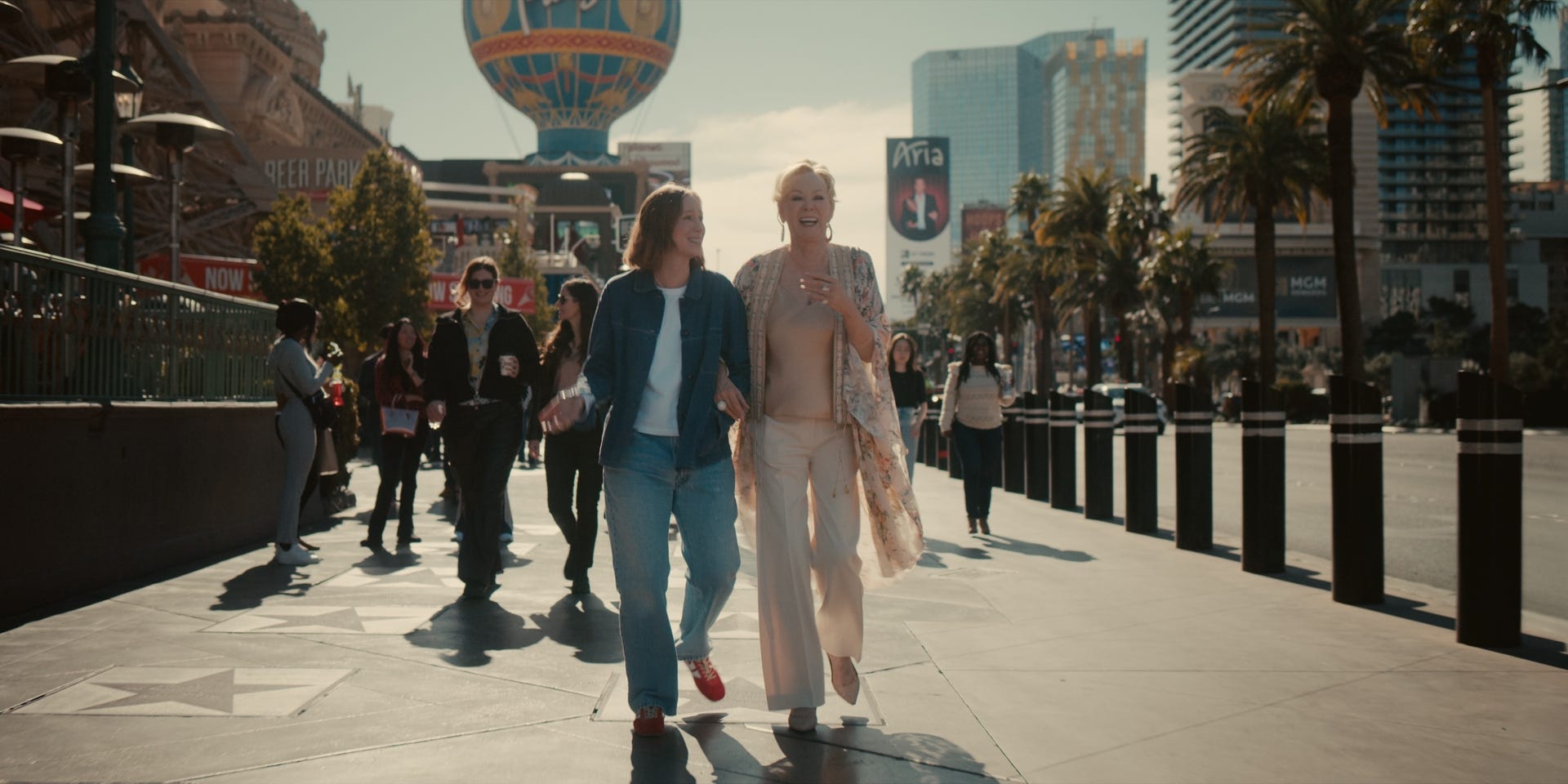
Thursday night’s series finale of “Hacks” falls closer to the “Succession” and “Six Feet Under” end of the spectrum than the “Seinfeld” end. However, it encapsulated the show’s struggle to thread the needle throughout this final season, largely abandoning the caustic wit of its earlier seasons, and replacing it with a tad too much of wearing its heart on its sleeve.
Maybe it’s a matter of preference: whether you come to the show for its satire of the entertainment industry, or the personal growth between Deborah (Jean Smart) and Ava (Hannah Einbinder). To me, the show reached its operatic heights whenever it was excelling at both, like at the end of Season 3, when Ava deliciously took a page from her boss/mentor’s playbook, blackmailing her way into being head writer for Deborah’s late-night show, after Deborah once again put her own needs first.
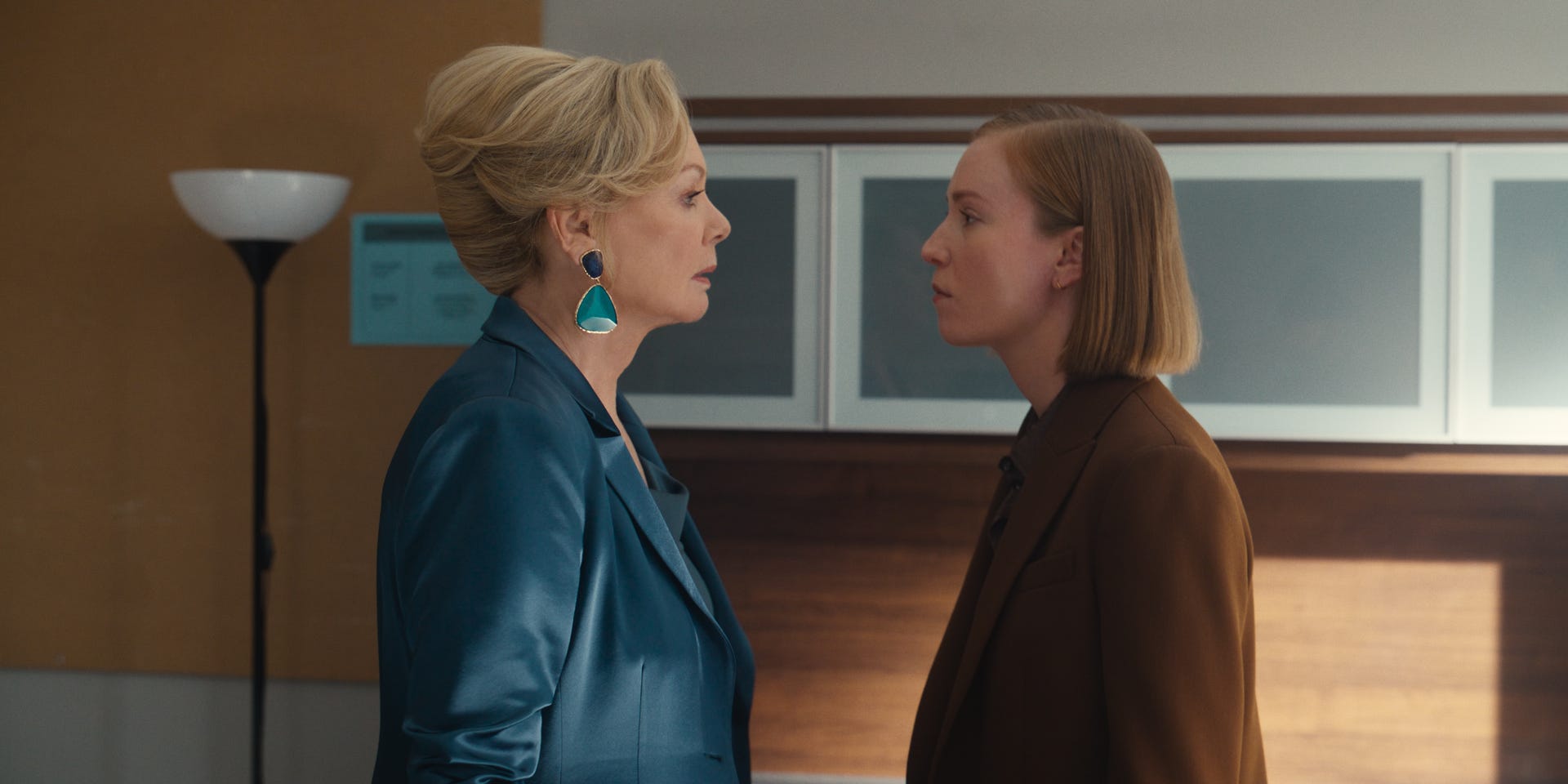
I’ve always appreciated how the dynamic between Deborah and Ava never fit neatly into a box. In the show’s pilot, they were a mismatched pair: a washed-up comedian and entitled newcomer sniping at each other’s generational and stylistic contrasts. A lesser — and yes, hackier — show would have left it at that. But the relationship grew into mentorship, friendship, and also kind of a work marriage, cleverly reimagining rom-com tropes and applying them to the show’s exploration of work.
Throughout the series’ run, Deborah and Ava realized that they were better together, settling into an equilibrium of mutual respect and collaboration. But in this final season, all of that became a little too simplistic and sentimental. I craved some of the thorniness and barbs of the earlier seasons. At the same time, for a final season concerned with Deborah’s legacy, it would have been hard not to default to earnestness.
Considering the theme of Deborah’s legacy, it also makes sense Thursday’s finale would have to contend with her mortality. But in the moment, the gut punch of her impending death was such an abrupt tonal shift that I thought: Is this just another joke? Yet later, when Deborah reverses course and decides all of it would be good fodder for one more comedy special, the cynical part of me wished the show had committed to the bit.
But who am I to reject earnestness? I’m prone to it too, and understand its value in an age when it’s vital to tell things as they are and to preserve real, human emotion. On Friday, as I was sorting through my thoughts about this finale, I caught that viral bit of comedian Ronny Chieng imploring Harvard’s graduating undergraduate class to reject the shiny bauble of AI.
“Untalented people love bragging about using AI to help them draft their speeches and their scripts and their podcasts and their promo videos for UFC fights at the White House,” he said. “But what they’re missing is this: the creating is the fun part. The best part of comedy writing is figuring out the puzzle pieces of a joke and getting the self-regard from having accomplished a difficult thing.”
I especially liked this next part:
The reason shortcuts to skip to the end aren’t always good is because the journey isn’t just how we acquire skills. The journey is the point of all this! It is! It turns out maybe the real Harvard was the friends we made along the way. Look, I know this won’t apply to everyone’s industry, OK? But I’m just saying, whatever your chosen profession is, please don’t let AI rob you of the fun part of it. I think your generation’s upcoming battle won’t be humans against AI. It’s going to be people with substance versus people with shallow knowledge. It’s going to be mastery versus faking it. It’s going to be people with good taste versus tacky. I trust you will put in the work necessary to be on the right side of those battles.
It reminded me of some of Ava’s soliloquies against AI throughout this season of “Hacks,” which became heavy-handed. Surely, the show’s writers know they’re preaching to the choir. Plus, the show has always demonstrated the fundamental value of the creative process, the trial and error, the learning something through doing it, through Deborah and Ava. Both in their relationship as mentor/mentee and creative partners and in their comedy itself, it’s about doing the work.
So despite the tonal inconsistencies of the season overall, it would be disingenuous for me to complain about the series finale. It gave Deborah and Ava — and us viewers — one last, satisfying hurrah with lots of nostalgic symmetry. And it’s especially fitting that in the show’s final moments, the pair returned to the best versions of themselves: in the middle of figuring out how to complete the circle, find the right punchline, and land the ideal ending.
Odds & ends:
Did some writing at the new day job: for the weekly newsletter that goes out to our member organizations, I wrote about a big rally that featured some of our members (also posted in article form on our website). I’m hoping I’ll keep getting to periodically put my reporter hat back on in this new job.
A perennial gripe with the glut of networks and streaming platforms: often, they’ll drop an entire season of a show, and barely anyone notices. Case in point: I had no idea Showtime’s “Couples Therapy” was back for a new season — until I stumbled upon an article about, of all things, Orna’s fashion choices. I devoured this new season, but noticed the “dump all episodes at once” model really does the series a disservice. There’s something weird and disorienting about watching someone’s entire, very intense therapeutic journey in one weekend.
A different kind of intense: the end of this week’s “Top Chef” felt like it came straight out of the show’s previous era. Hoo boy. “Top Chef” watchers: let’s discuss.
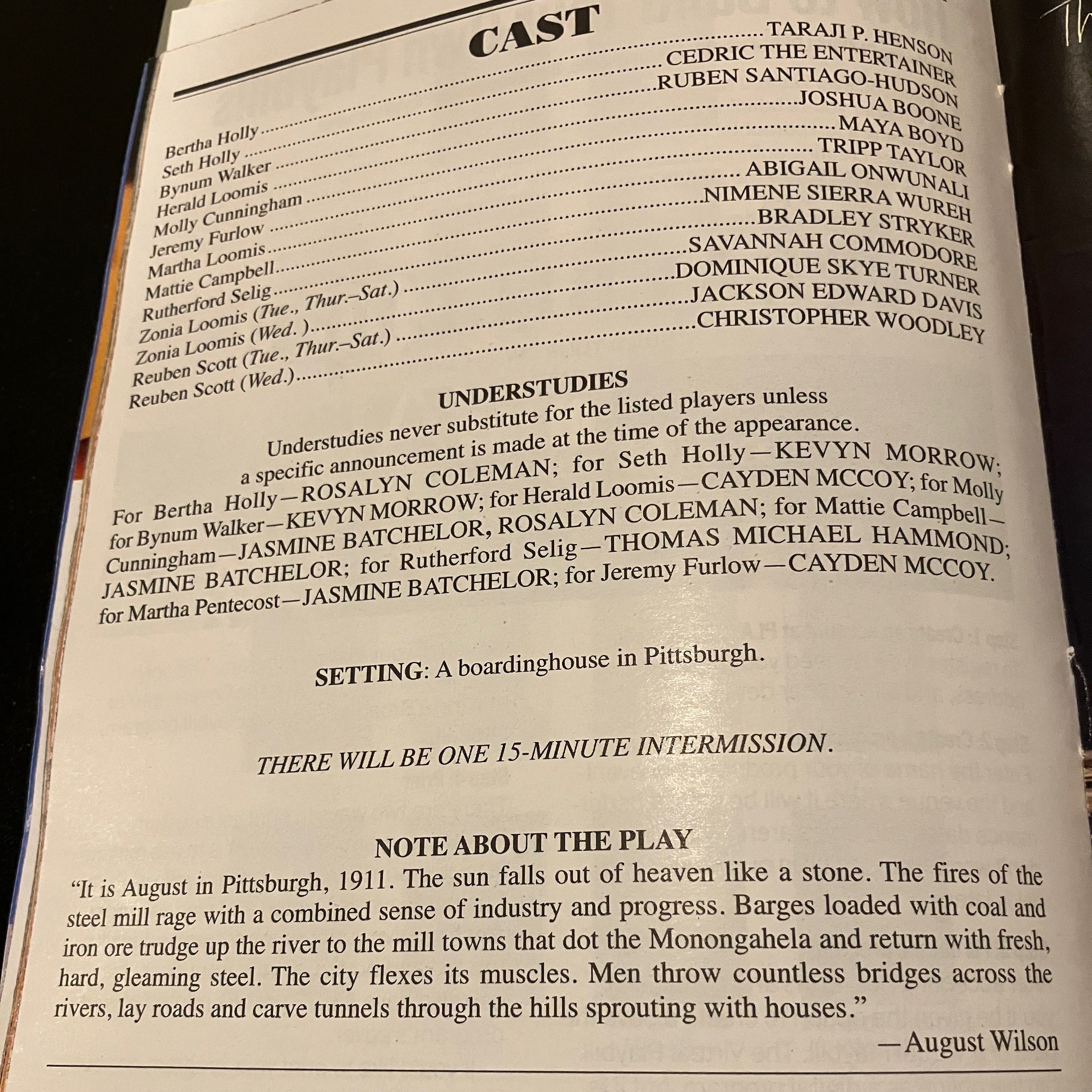
Had some good rush ticket luck and caught the Broadway revival of August Wilson’s “Joe Turner’s Come and Gone,” in part because I must always rep the hometown. Some of the performances and staging were a bit uneven — at times, it was as if the actors were in different plays altogether. But hearing the rhythm of Wilson’s language: transfixing as ever.
In more theater, I’m also seeing the much lauded “Death of a Salesman” revival this week, and in preparation, revisited the text for the first time in 16 years. To state the obvious: man, Arthur Miller sure could write.
Finally, I’ve fallen off of podcasts for various reasons, but I’ve been enjoying “The Obit Project,” co-produced by audio legend Jad Abumrad. It’s a series of audio obits reported by students at the University of Montana. I never realized reporting an obit is such a great journalism teaching tool. It involves everything from source outreach, to finding the right angle, to shaping a story’s narrative arc — and especially, the challenge of capturing the full measure of the story’s subject when you can’t directly talk to them.
Thanks for reading and for being here. “Hacks” watchers: let’s talk about the series finale. More broadly, what do you look for in series finales? What are your personal series finale high-water marks? We may have to revisit this series finale conversation in a month with “The Bear” (I do not have high hopes). Next newsletter (unless I decide otherwise): more literary nemeses.
I'm so glad I found your newsletter! (Just subscribed.) Fully agree with you on the Hacks finale... satisfying but lost a bit of its edge. Still good, though.