
Long story short
On the Oscar-nominated shorts

Programming note: As noted in last week’s newsletter, I’ll be at the University of Missouri and the True/False documentary film festival later this week, so this newsletter may or may not appear next Sunday.
Do people still do Oscar pools? I’ve only ever done it once, when I organized one during my first year of college. But for many consecutive years, long before I wrote about the Oscars professionally, or even fathomed that it was a job someone like me could do, I would dutifully print and fill out an Oscar ballot for my own amusement.
The major categories were usually easy enough. But the section that was anyone’s guess, the make or break of Oscar pools, the stumper: the three shorts categories. In recent years, I’ve even made a concerted effort to see the nominated short films myself, and still, they’re hard categories to predict. The entries can vary widely in style, approach, and topic. And with some exceptions (like if there’s a famous person involved), most of the nominees don’t really get the same kind of awards campaigns and marketing pushes. As a result, there isn’t the same level of visibility as their feature film counterparts.
It can also be a challenging exercise to evaluate short films. I enjoy seeing how shorts can take on many forms and functions. Some are clearly proofs of concept for something larger; others tell a succinct tale. Some have very straightforward storylines, giving the audience a little slice of someone’s life; others are more experimental or impressionistic, trying something on for size or going for a “just vibes, no plot” approach.
During the lead-up to the Oscars, the nominated shorts now often screen in theaters (New York friends: you can see them at the IFC Center). You can also jury-rig your own little screening series or festival at home: typically, many of a given year’s nominees are available on streaming, or the filmmakers have put them on YouTube or Vimeo. For this year, I found all but four of them online (see parentheticals below). In the spirit of the format, here are some short cuts about most of the Oscar-nominated shorts.
LIVE-ACTION

“The Singers” (Netflix)
Directed by Sam Davis (a previous documentary short nominee for producing “Nǎi Nai & Wài Pó,” a lovely little movie I really enjoyed at the time), this one was a little too scraggly for me. A loose adaptation of an old short story, it casts a bunch of viral music stars (whom I had not heard of) as a group of old dudes hanging out at a dive bar, who then challenge each other to a sing-off. It’s pleasant enough, but I felt like it needed a little more, even for a short.
“A Friend of Dorothy” (YouTube)
The sentimental favorite of this category. A teen named JJ (Alistair Nwachukwu) accidentally kicks a soccer ball into the garden of an older woman, Dorothy (Miriam Margolyes). When he knocks on her door to inquire, she asks him for some help opening a can of prunes. Soon, JJ starts coming over every afternoon for tea and conversation, and Dorothy encourages JJ, an aspiring actor, to borrow from her extensive library of plays. Just a warm and delightful slice-of-life story and a nice ode to intergenerational friendships that made me smile.
“Two People Exchanging Saliva” (YouTube)
This was darker and weirder than I expected (and at 36 min., the longest in this category). A department store salesperson and a frequent shopper become infatuated with each other in a society where kissing is forbidden, and people slap each other as forms of payment (for example, buying a dress at this store may cost you 55 slaps). I did not get that latter part until much later — initially, I wondered: are they being punished for frivolous purchases? There are a lot of elements like these that go unexplained. But the visuals and mood are really something. Sumptuously shot at the famed Parisian department store Galeries Lafayette, unrequited love, and a protagonist named Malaise. Very French.
“Jane Austen’s Period Drama” (YouTube)
The fun one of this category: a parody of Jane Austen tropes, in which a suitor proposes to the protagonist, but is thwarted by a gush of blood. He mistakenly thinks she’s gravely injured — but no, it’s that good old monthly bleeding! A very good time, and an entertaining way to talk about the daily indignities of periods.
ANIMATED
“Forevergreen” (YouTube)
“The Girl Who Cried Pearls” (YouTube)
I found both of these a bit too moralistic. The former is about the dangers of littering and forest fires; the latter is about greed. But I enjoyed seeing the range of animation styles here and throughout the category. “Forevergreen,” done in the style of wood cuttings, is especially striking.
“Butterfly (Papillon)” (YouTube)
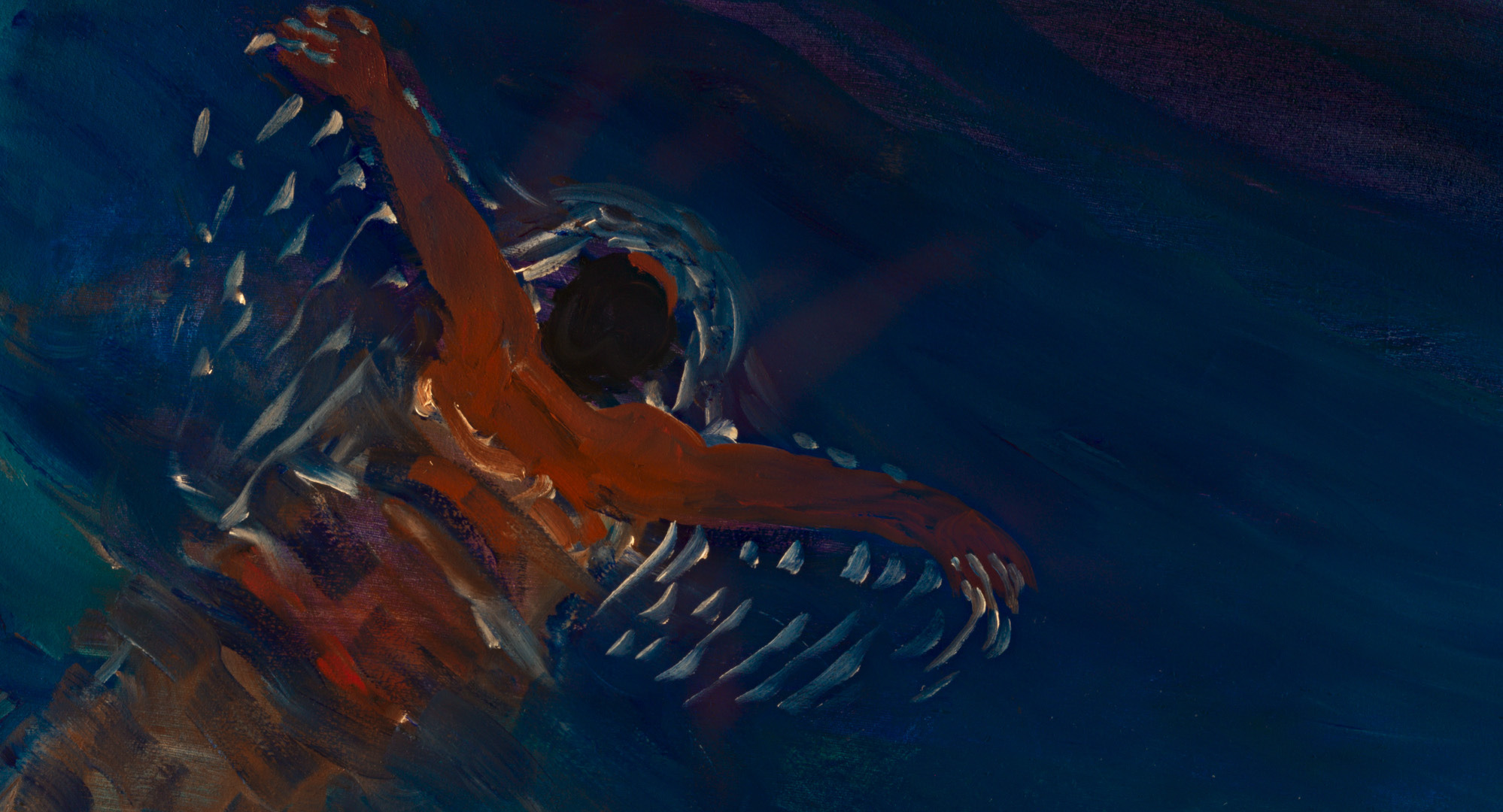
Another one in which the style is really the standout feature. It’s a little biography of French Olympic swimmer and Holocaust survivor Alfred Nakache, told in brushstrokes that look like oil paintings.
“Retirement Plan” (YouTube)
A short and sweet cartoon strip-esque selection to close out the category. A man named Ray (voiced by Domnhall Gleeson) talks about all of the things he wants to do in retirement. The plans go from ambitious and grandiose, to more mundane and realistic — followed by the realities of mortality.
DOCUMENTARY SHORT
Fair warning: these are all on the longer and topically heavier side.
“Armed Only with a Camera: The Life and Death of Brent Renaud” (HBO Max)
An informative tribute to the work of journalist and documentarian Brent Renaud, who died in 2022 in a targeted Russian attack while covering the war in Ukraine. At first, I thought some of its presentation might feel a bit too conventional. But it ends up taking on a video essay format. His brother and collaborator Craig weaves together a present-day timeline — footage of the aftermath of his death — with selections of the brothers’ reporting, and audio from past speeches Brent gave about his life and upbringing.
“All the Empty Rooms” (Netflix)
“The Devil Is Busy” (HBO Max)
Both of these find a fresh and compelling angle on a major topic. In “All the Empty Rooms,” CBS News correspondent Steve Hartman and photographer Lou Bopp set out to document the bedrooms of kids who died in school shootings. It’s a thought-provoking meditation on the politics of memory.
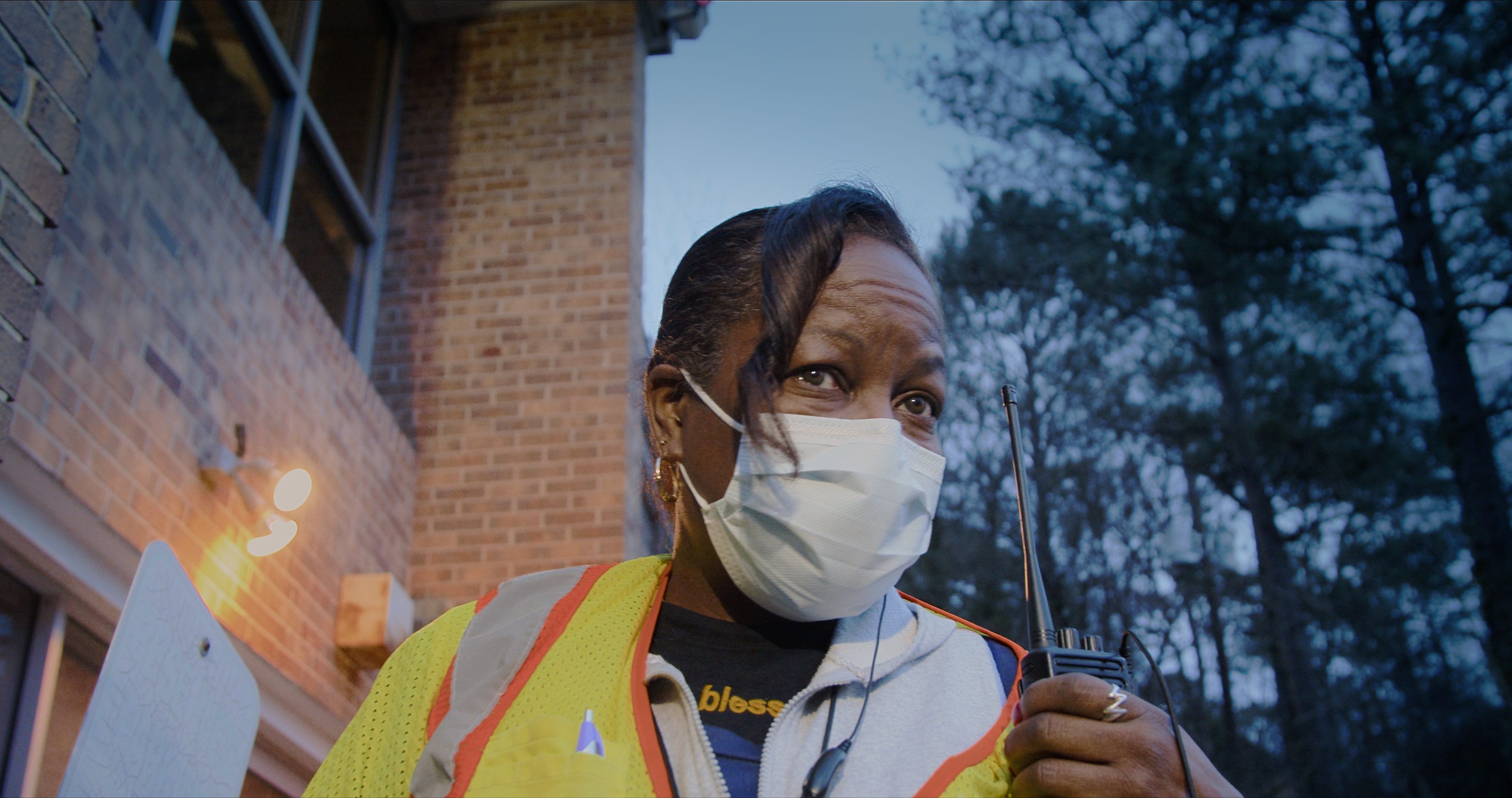
My favorite of the three, “The Devil Is Busy” is kind of like if “The Pitt” were set at a reproductive rights clinic in Atlanta (which would be a fantastic series, honestly). It features day-in-the-life snapshots of everyone from the sonogram technician, to the call center operator, to the OB/GYN, all grappling with the implications of Georgia’s “heartbeat law,” effectively banning abortions after six weeks. By far the most captivating person, and the one we see the most, is the clinic’s head of security, Tracii Wesley. The first one in and last one out each day, she valiantly protects patients from the barrage of anti-abortion activists shouting vile screeds through megaphones. It’s infuriating, it’s powerful — and dare I say, inspiring too.
Odds & ends:
“For some time now we have been thinking about how best to end the show on an unparalleled high. Unlike some of our characters, we know when to leave a party.” — “Industry” creators Mickey Down and Konrad Kay, on the show getting renewed for a fifth and final season. It’s rare when a great series gets to end on its own terms, instead of either dragging on way past its prime, or never getting the chance to find its sea legs. And for the most part, quitting while you’re ahead really only seems to happen on HBO (see also: a certain show about a certain family).
Over on Hulu, the post-apocalyptic thriller “Paradise” is back for Season 2. I was very stressed watching the first three episodes. It now feels like two different shows in one: Sterling K. Brown and Shailene Woodley are on some version of “Lost,” while back at the bunker, it’s like “Homeland” or “House of Cards.” I’m curious to see if/when they resolve this bifurcation as the season progresses.
“Top Chef” returns this week — coinciding with the premiere of former longtime host Padma Lakshmi’s return to cooking competition shows: a show on CBS that’s not “Top Chef,” but is not NOT “Top Chef”? Interesting.
Thanks for reading and for being here. Let me know if you end up watching any of these Oscar-nominated shorts, or if you have thoughts about how to evaluate short films. This newsletter hopes to regain her sea legs someday.
It’s become my tradition to watch at least one category of the shorts in theaters and try to find as many of the others to watch online as I can. Makes filling out the Oscar ballot more enjoyable since I have more context for this overlooked category on the bracket.